
South Maui’s saltier, more turbid waters could signal drought is taking a toll
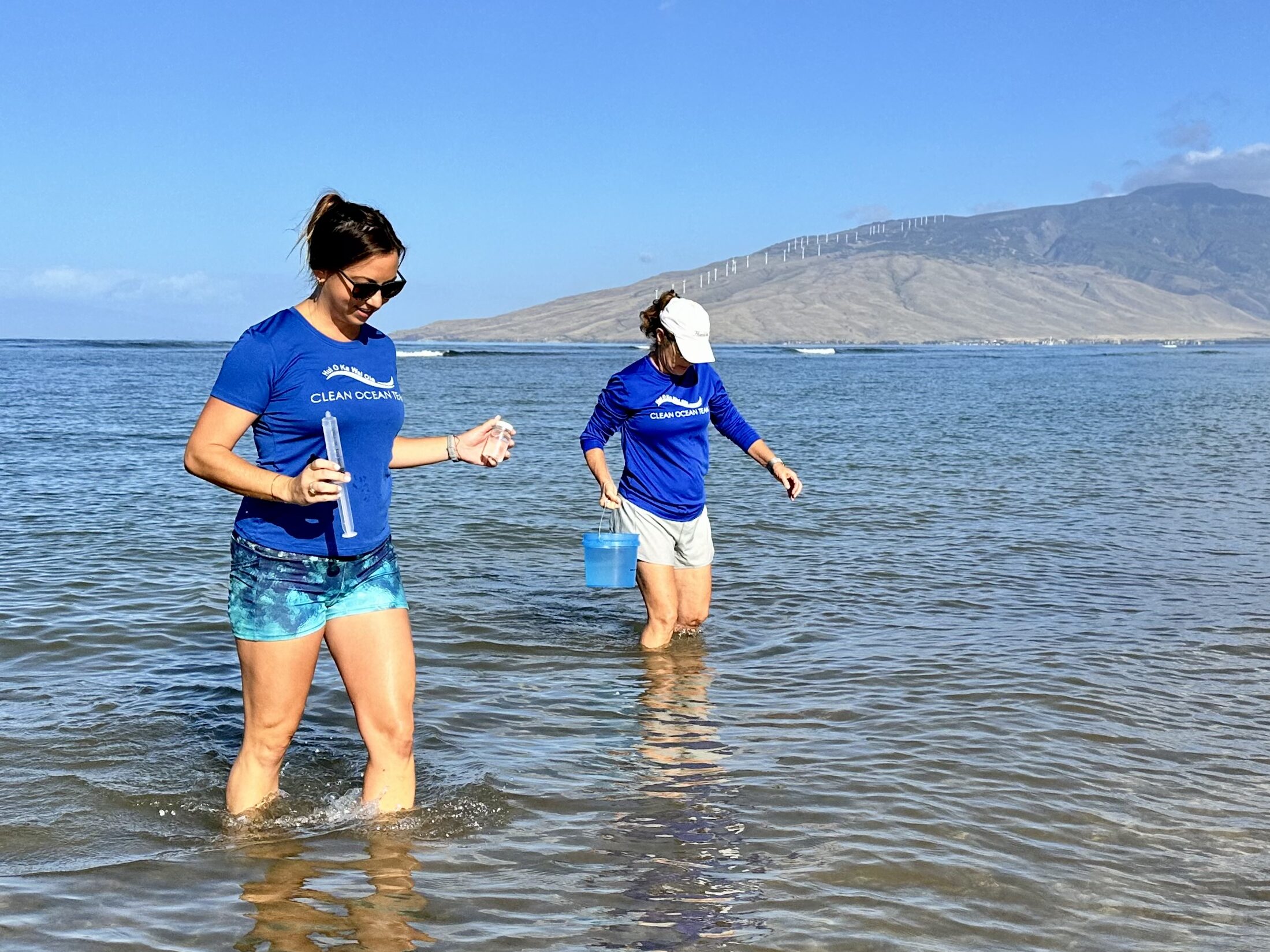
Liz Yannell remembers when the waters off North Kīhei were calmer, clearer and lined with vibrant coral reefs just a few years ago.
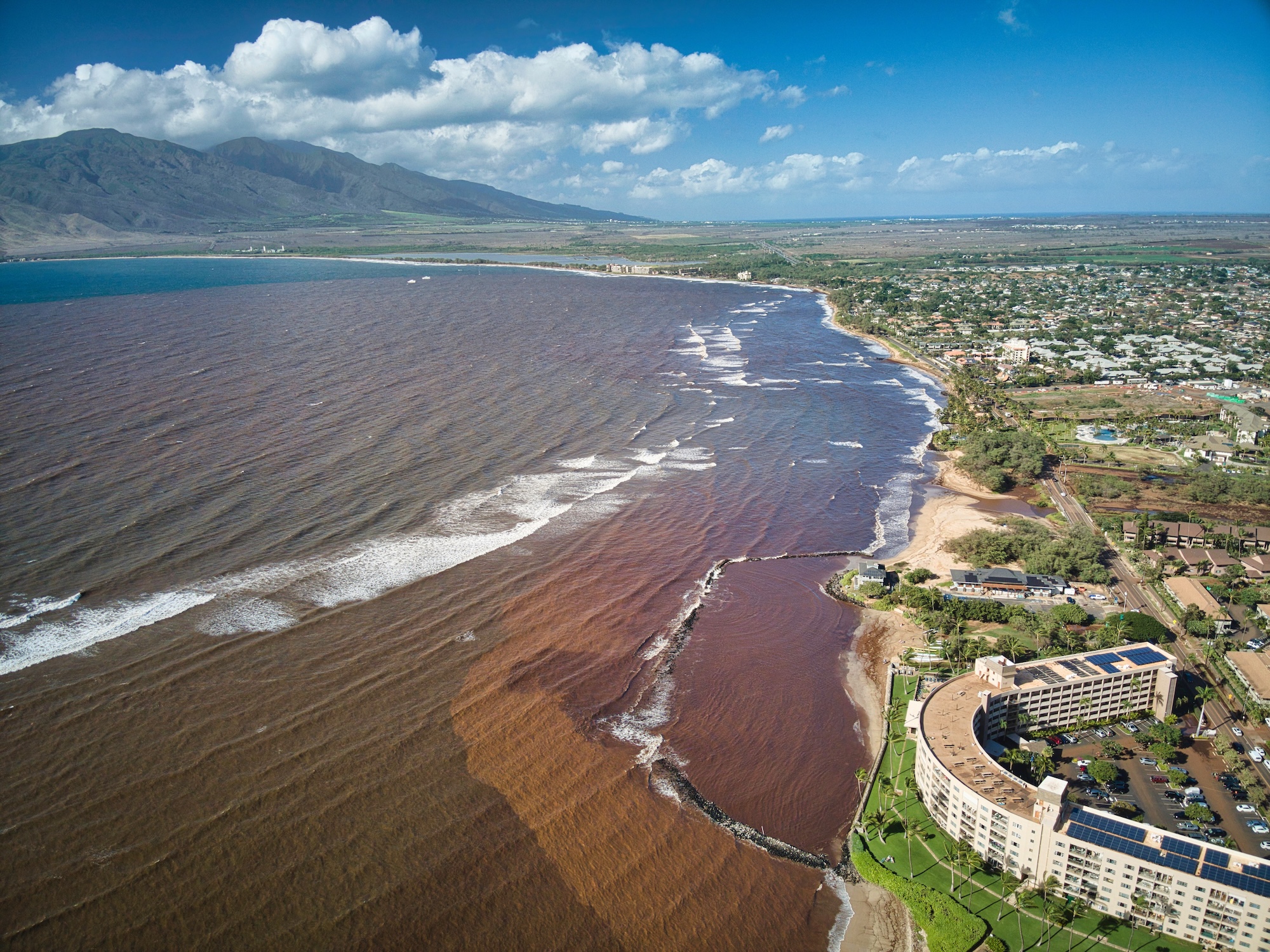
Now “it’s chronically brown,” and judging from recent test results, saltier than usual, too.
“What we think we’re seeing is just that the drought is showing up in our coastal waters,” said Yannell, the program manager of Hui O Ka Wai Ola, a group of citizen scientists who monitor ocean quality in West and South Maui.
Yannell and her team are trying to understand more about what’s causing the recent increase in salinity, “a very curious new thing,” she told a crowd earlier this month at the Kula Community Association meeting.
Yannell spoke to Kula residents because she suspects the changes in South Maui could reflect a “trifecta” of factors Upcountry: worsening drought, large fires in 2023 and 2024 that left the landscape scorched and bare, and an “explosion” in the population of deer who trample the soil and make it harder for rain to filter through the earth.
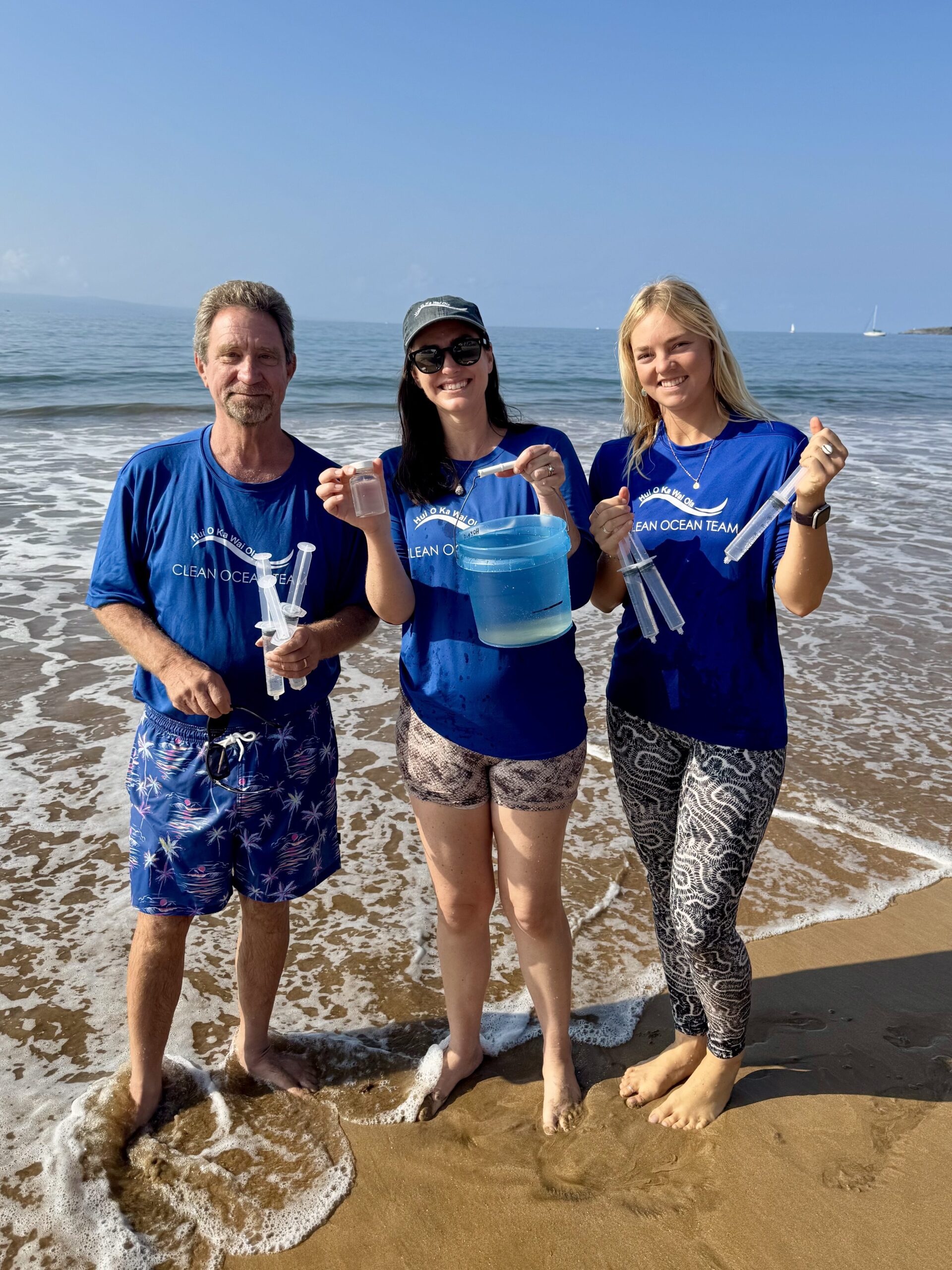
The hui, which has collected more than 6,000 samples since it was formed in 2016, measures the basics of water quality: pH levels, oxygen, temperature, salinity and turbidity. They’re like the first screening checkpoint for water quality. If they notice something alarming, they’ll work with their partners to investigate it more.
From 2018 to 2020, they found the waters off Sugar Beach had salinity levels of 34 to 35 parts per thousand, which is normal for seawater. Now, they’re consistently seeing levels of 36 to 37 ppt — still normal, but enough of a change from a decade of data that they’re curious to see whether it’s a trend.
For the hui that goes out to collect samples every three weeks, every little change in the ocean offers a clue, raising early red flags about how the wider environment could be taking a toll on Maui’s critical reefs and nearshore waters.
“Our ecosystems can be really fragile, and any changes in the ocean water quality can affect them,” Yannell told the Hawai‘i Journalism Initiative. “We’re trying to figure out what this means, and what it means for the connection between our land, our weather systems and our ocean waters.”
A lack of funding paused salinity testing at Sugar Beach for a few years, but recognizing its importance, the hui worked to bring it back in 2024.
Turbidity levels, which measure water clarity, also are up across North Kīhei. In the waters off the Kīhei Canoe Club, turbidity rose from less than 10 nephelometric turbidity units, or NTUs, in early 2018 to over 20 NTUs in early 2026.
At sites the hui has observed with turbidity levels over 5 NTU, “you can pretty much guarantee that the coral out from the coastline is either already dead or it’s challenged or degraded,” Yannell said.
Too much sediment in the water can cover the reef and block out the sunlight they need to live.
The areas where salinity and turbidity have increased are downslope from recent burn scars in Pūlehu and Kula, and at the base of the Waiakoa and Hapapā watersheds that contain some major gulches, Yannell said.
This includes places like Kīhei Canoe Club, Mai Poina Park, Kalepolepo Park and Waipu‘ilani Park, which all tend to be hotspots for turbidity and nutrients compared to the more than 50 sites in West and South Maui that the hui monitors.
Cove Park, called one of the best places to learn to surf on Maui, is one of the worst sites for turbidity and nutrients. Yannell noted it’s located in the vicinity of the Kīhei Wastewater Reclamation Center as well as nearly 100 cesspools.
Nutrients such as nitrogen and phosphorus can run off into the ocean from areas where fertilizers are used or where there’s pet and wildlife waste. Yannell said hui members have spotted lots of clumps of deer poop washing up onto the shore. Too many nutrients can cause excessive algae growth that blocks sunlight and leads to lower levels of oxygen that can kill aquatic life.
One indicator that is decreasing at the North Kīhei sites is the amount of nitrates, which are caused by human inputs. From 2018 to 2026, nitrate levels dropped from just over 200 milligrams per liter to around 100. The hui thinks the trend is related to the end of sugar cane production on Maui in 2016.
Robin Knox, lead scientist with the Maui nonprofit Save The Wetlands Hui and a longtime water quality researcher, said the wetlands in South Maui followed similar trends as North Kīhei’s coastal waters in 2024. The hui was concerned that it was a combination of drought, increasing development and proposals to draw more water from the Kama‘ole aquifer.
Around that time, the two ponds along Pi‘ikea Street dried up, something “none of us had ever seen” before, including multigenerational families of the area, Knox said.
“Wetlands are that dynamic interface between the aquifer and the ocean,” Knox told the Hawai‘i Journalism Initiative. “And that’s part of why it’s so important that we not destroy the remaining wetlands that we have.”
North Kīhei was once covered in wetlands, which help absorb floodwaters so they can filter back into the aquifer. The freshwater pressure in the wetlands near the coast helps prevent saltwater from getting into the aquifer, and the freshwater that mixes with the saltwater creates a nursery for fish.
Keālia Pond, for example, is “a nice, big bridge” that helps absorb water from the gulches and rivers flowing from the watershed, Yannell said.
But as the wetlands have disappeared, Kīhei is less capable of handling the “mud floods” that come barrelling downslope during big storms Upcountry, swamping roads and filling wetlands with sediment that keep them from doing their jobs of protecting the ocean, Knox said.
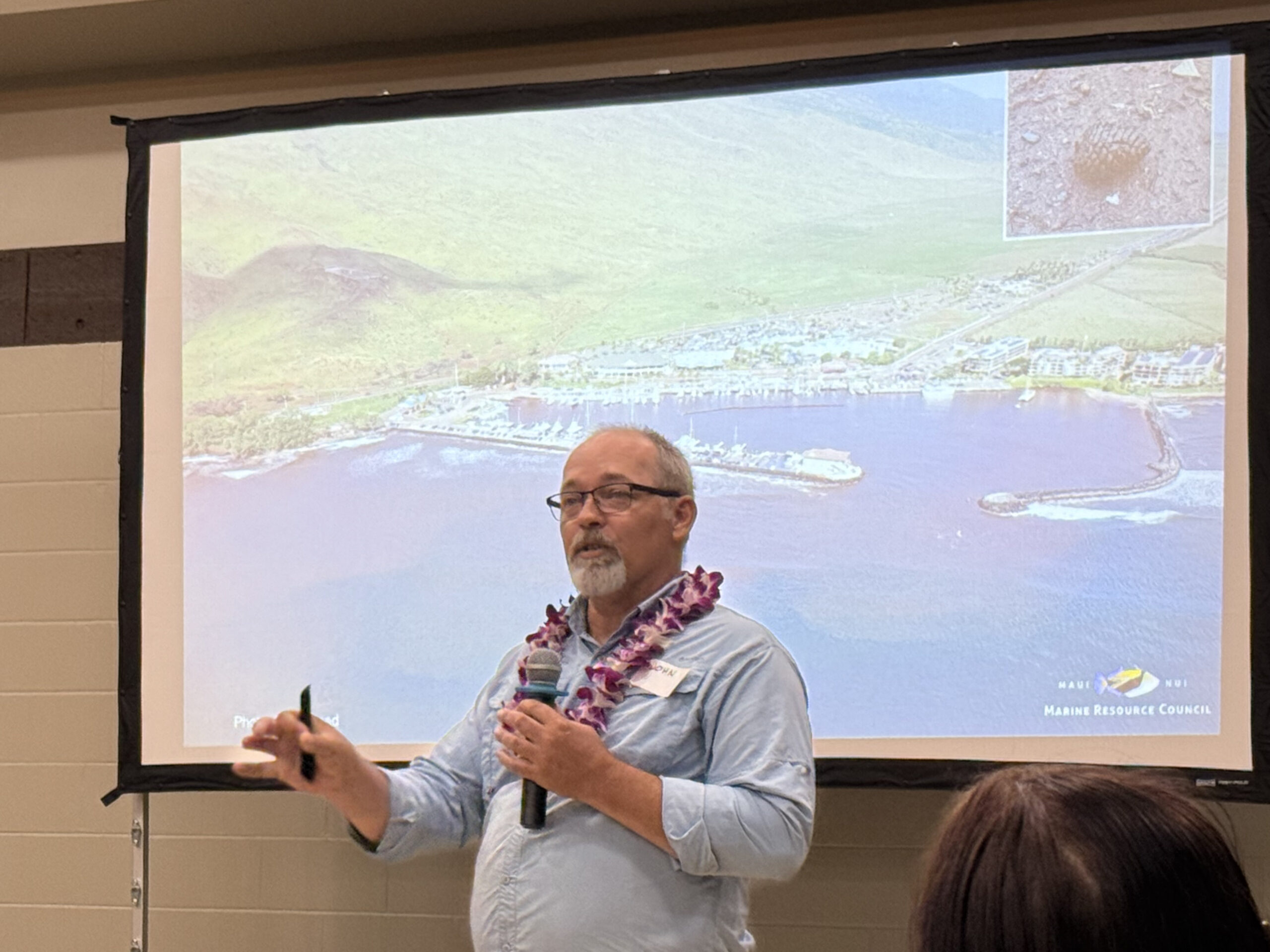
As time goes on and the landscape changes — houses are built on asphalt, soil is degraded from overgrazing and fires — there’s less groundwater infiltration and more surface runoff, said John Starmer, chief scientist with the Maui Nui Marine Resource Council, one of the members of the Hui O Ka Wai Ola along with The Nature Conservancy of Hawai‘i and the West Maui Ridge 2 Reef Initiative.
“Anything that you do, from the ocean all the way up to the top of the mountain, has the potential to run downstream and affect down the line,” Starmer said during the community meeting in Kula.
To emphasize the point, he showed a picture of a Monterey pine cone that rode stormwaters all the way down to Kīhei.
“Even though it might take months, years, decades, centuries, stuff that goes into the ground eventually comes out to the ocean,” he said.
Starmer said the island fortunately received a few days of slow, steady rain earlier this month, which allowed the water to filter into the ground and didn’t create massive surface runoff. Water levels rose in the muliwai, the salty water estuaries at the end of the gulches, “but it was all through groundwater.”
In an ideal system, the plants are soaking up the moisture in the air, the soil is treating the water and filtering chemicals, and the rain is infiltrating the ground, which in turn feeds the streams. Water still needs to reach the ocean — that’s part of the cycle — but a functioning system cleans it and delivers it in a manageable way, Starmer said.
“It’s sort of like putting the brakes,” he explained. “You’re getting the same amount of water, but you’re soaking it into a sponge, and that sponge is slowly releasing it. That means you’re not having torrential flows in the gulches. You’re not seeing as much erosion. And that’s a system we would love to see more prevalent here on the island.”
Planting native species, controlling deer, managing open land and protecting the remaining wetlands are all key parts of improving water quality offshore, the experts said.
Starmer said there are efforts ongoing Upcountry to remove invasive wattle trees, replace them with koa forest and then monitor streams nearby to see if that eventually changes the turbidity downstream. He added that if residents and businesses want to have a more direct impact, they can learn about organic, reef-friendly landscaping from the marine council.
South Maui’s turbid ocean waters and clogged wetlands are a reminder of what early Hawaiians have long known — what happens on land affects the ocean.
“I think we do need to look to ancestral and Hawaiian cultural and multigenerational knowledge of people that have lived here and utilize that, along with the modern tools of technology that we have to make decisions,” Knox said.
