
‘A lot at stake for West Maui’: Three longtime residents face off in Aug. 8 Democratic primary

A chef, a high school teacher and a business advocate are competing for the chance to represent West Maui in a state Democratic primary race left wide open by incumbent Ellie Conchran’s unexpected switch to the Republican Party in March.
Kanamu Balinbin, Ashley Olson and Sne Patel are seeking the Democratic nomination for House District 14, which covers nearly all of West Maui from Mā‘alaea to Lahaina to Kahakuloa to Waihe‘e. Green Party candidate Pā‘ele Kiakona, a prominent face of Lahaina Strong, also is running for the seat that Cochran has held since 2022.
But Cochran, a longtime Democrat lawmaker, left the party saying she was frustrated with Lahaina’s recovery from the Aug. 8, 2023 wildfire and found the Hawai‘i GOP more inclusive.
Cochran and Kiakona are both running unopposed in the Aug. 8 primary that will fall on the three-year anniversary of the wildfire. They automatically advance to the General Election on Nov. 3.
But whoever wins the Democratic primary likely will have a good shot at the competitive seat. West Maui has long been a Democratic stronghold — last electing a Republican to the state House in 2002.
And while all three Democrats are political newcomers who have never been elected to public office, they say their backgrounds and experiences have prepared them for politics.
KANAMU BALINBIN: DRIVEN BY DISASTER RECOVERY
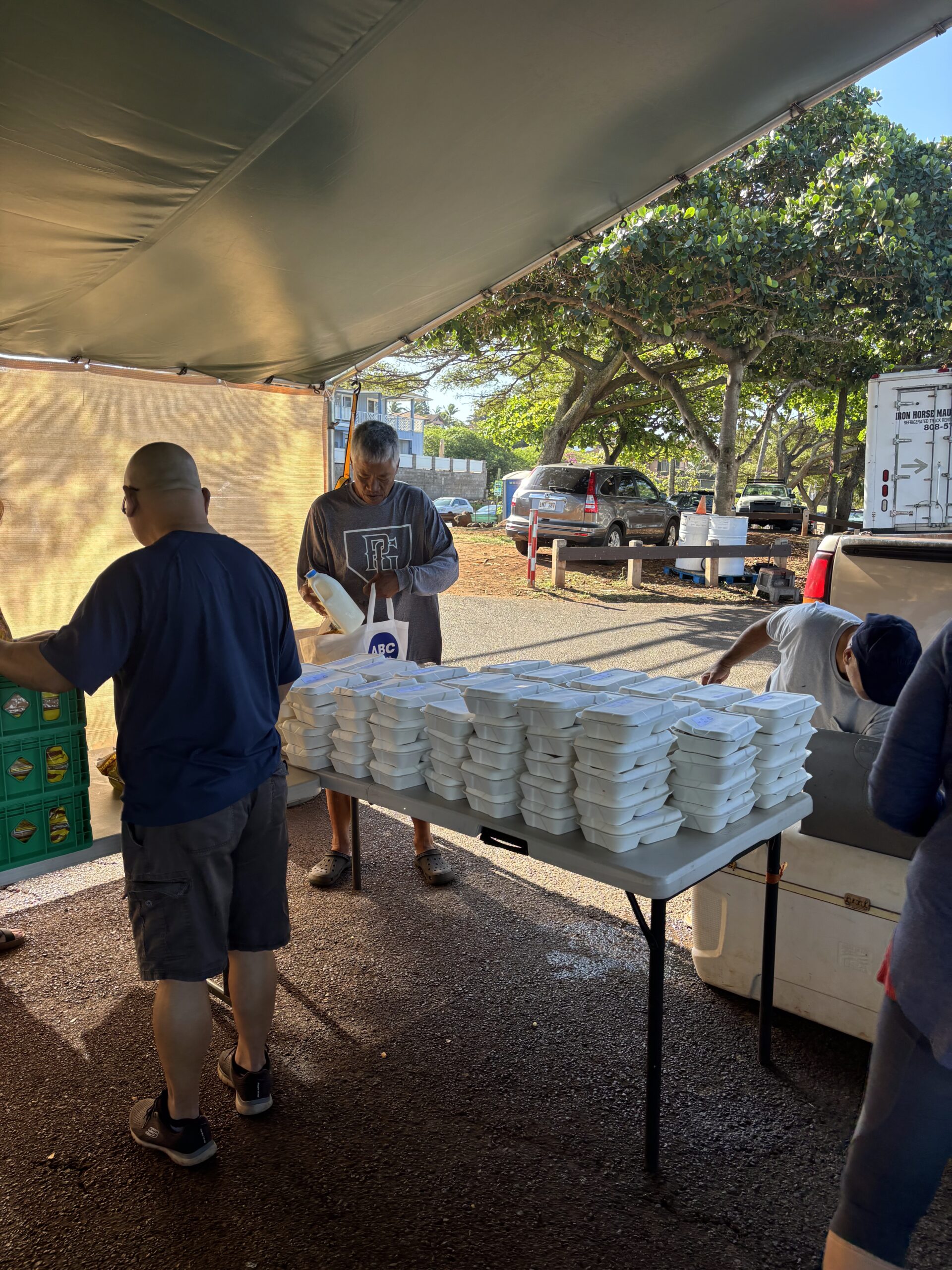
Every Wednesday, Balinbin wakes up at 4:30 a.m. to drive down to the Maui Food Bank and fill up on supplies to take to the distribution hub at Pōhaku Park. There, volunteers hand out produce, canned and dry goods, and diapers to about 100 people three days a week.
It’s a weekly reminder there are still fire survivors in need, living in hotels and federal emergency housing until they can rebuild and return to Lahaina. Balinbin, a crew leader at the hub along with Chris Espiritu, said the disaster recovery is the reason he’s running for public office.

“It’s shown with the fire, it’s shown with the Kona lows that we had recently, that safety and disaster readiness is failing in that category,” Balinbin said.
The 57-year-old chef and owner of Coconut Grove Catering has run for public office several times before, campaigning unsuccessfully for the Maui County Council’s West Maui seat in 2016 and 2018 as well as West Maui’s House seat (previously known as District 10) as a Republican in 2020 and as a Democrat in 2022 and 2024. Balinbin feels like he has nothing to lose by running again.
“If for some reason we don’t make it out of the primary, we’ll still keep doing what we’re doing for our community,” he said.
Disaster recovery would be one of his top priorities if elected, Balinbin said. He wants to hold property owners responsible for controlling their grass to mitigate fires and make sure they have proper drainage to handle major storms.
Balinbin, who shuttled his son out of Wahikuli on a golf cart on the day of the fire, said he has “mixed emotions” about how the recovery has gone so far. He’s glad to see a lot of houses being built, but he says he wants to see what the state can do to help the county speed up the permitting process and “put their money where their mouth is” to build more affordable housing.
“I cannot have an answer now because nobody had an answer yet, but I would think dialogue, meetings and people who want to get it done,” he said.
Balinbin, who is Native Hawaiian and says his family comes from the line of Pi‘ilani, is also passionate about keeping “Hawaiian lands in Hawaiian hands.” He said he wants to pass legislation that would make sure Lahaina is built back the way the community wants, including “maybe push Front Street back” and not allow the restaurants that were on the water to build so close to the shoreline again.
The Lahainaluna graduate comes from a family of teachers and chefs and added that another one of his interests is improving the quality of school meals, relying less on processed foods and promoting healthier ingredients. That coincides with the state Department of Education’s current push to source 30% of all food in public school meals locally by 2030.
But it’s not just school meals that Balinbin thinks need improvement.
“Our recipe that we have right now to run this government on the county and state side … is missing a lot of ingredients,” he said. “Missing compassion, missing common sense, missing flavor. And I think I bring those to our recipe.”
ASHLEY OLSON: TACKLING THE HOUSING AND TEACHER SHORTAGE
A couple of years ago, Lahainaluna High School’s staff was so shorthanded that 15 classes were held in the cafeteria because there weren’t enough adults to supervise students in separate rooms.
“We have known for a decade, at least, that we are facing a teacher shortage crisis,” said Olson, who started teaching Spanish and French at Lahainaluna in 1993 and now works with the school’s English language learners.
That’s why education and affordable housing are two priorities that go hand in hand for Olson, the president of the Hawai‘i State Teachers Association’s Maui chapter. Rent makes up a big portion of entry-level teachers’ salaries, and often they’re working second jobs or going to school to earn another degree to help increase their pay, she said.
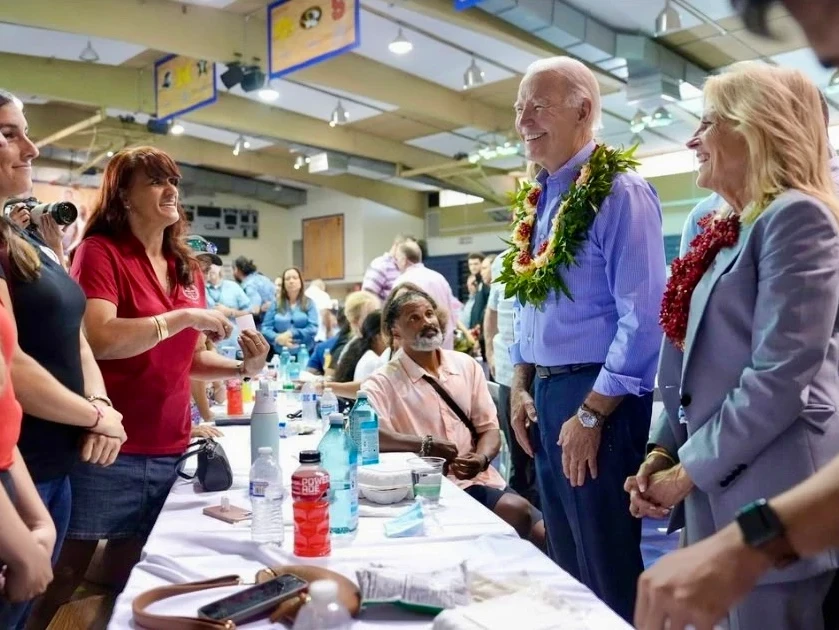
Olson, who lives in workforce housing in Nāpili, is supportive of the Department of Education’s move to provide teacher housing, including 47 new units in Lahaina. She also wants to see the expansion of programs like Nā Hale O Maui — which holds land in a trust and sells homes at affordable rates — as well as direct assistance that could include helping residents with down payments.
She also likes the idea of tax credits for full-time residents to offset the impacts of the state’s general excise tax, which has been criticized as regressive, forcing lower-income residents to allocate a higher share of their incomes. And, she backs higher tax surcharges on unoccupied investment properties, with tax incentives for investment property owners who rent to residents long term.
“I would like for life to be less of a struggle for the people who were born and raised here,” she said.
Olson, who’s lived in West Maui for 35 years, was a vocal advocate for staff and students in the months after the fire, testifying at Board of Education meetings about the horrors of driving through the burn zone, the rising costs of rent for teachers, and the lack of critical internet access.
Infrastructure would be a top priority for her if elected. She wants to see more investment in underground lines and critical utilities moved back from the shoreline. She’s interested in improving interisland transportation and internet connectivity for work and health care.
In her work with the Hawaiʻi State Teachers Association, which has endorsed her candidacy, Olson has served on the National Education Association Resolutions Committee and gained experience “drafting and refining policy language.” Her role has put her in contact with many lawmakers over the years, and she thinks she’ll work well with them if elected.

Olson, who is in her 50s, said she decided to run at the urging of the late May Fujiwara, a longtime advocate for West Maui seniors.
“We have some very unique needs in terms of our lack of affordable housing exacerbated by the fire,” Olson said. “We have a lot of people who are really frustrated and are looking for somebody that’s going to go into places of power and bring their concerns forward and be willing to fight for those concerns. So I figured it was time, and I hope that my community will trust me and have faith in me and give me their vote.”
SNE PATEL: BRINGING BACK PEOPLE AND JOBS
In September 2024, Patel sat in front of a Congressional committee and laid out the struggles of a town fighting to recover from one of the most devastating disasters in its history. He talked about the major economic blow from the loss of so many businesses and urged the panel to find solutions.
Now Patel, the 47-year-old president of the LahainaTown Action Committee, hopes he’ll get the chance to steer Lahaina’s recovery as a state lawmaker. Patel lost two properties in the fire and said he understands the stress that families, businesses and even the government are facing.
“That collective knowledge … is what West Maui needs right now,” he said. “Somebody that is practical and solutions-based and wants to work together with people in the community and government to get things done.”
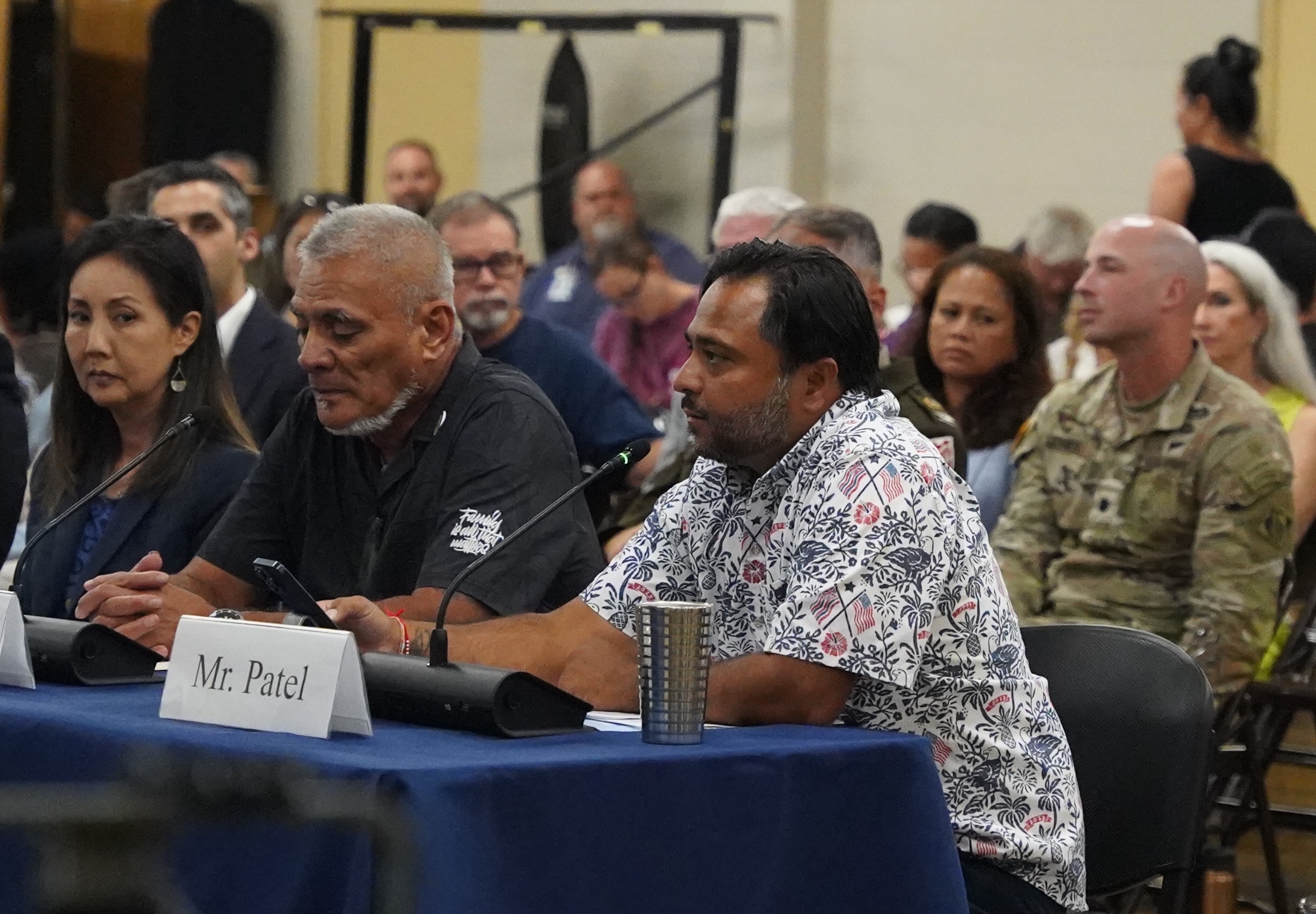
Patel, who serves on the Maui Economic Recovery Commission, is eager to bring back businesses to stoke Lahaina’s recovery. The rebuilt homes have been “bright spots,” but he worries that the “slow progress on the commercial side” will leave the town without the labor force to fill them.
“The business recovery in West Maui is not separate from the Lahaina recovery,” said Patel, the director of sales and advocacy at Maui Resort Rentals.
Patel thinks the government needs to streamline permitting and coordinate better between the state and the county. He suggested things like tax incentives, low-interest loans and technical assistance to help businesses move forward. At the end of the day, businesses really need clarity about the future of the commercial areas, especially the makai side of Front Street, he said.
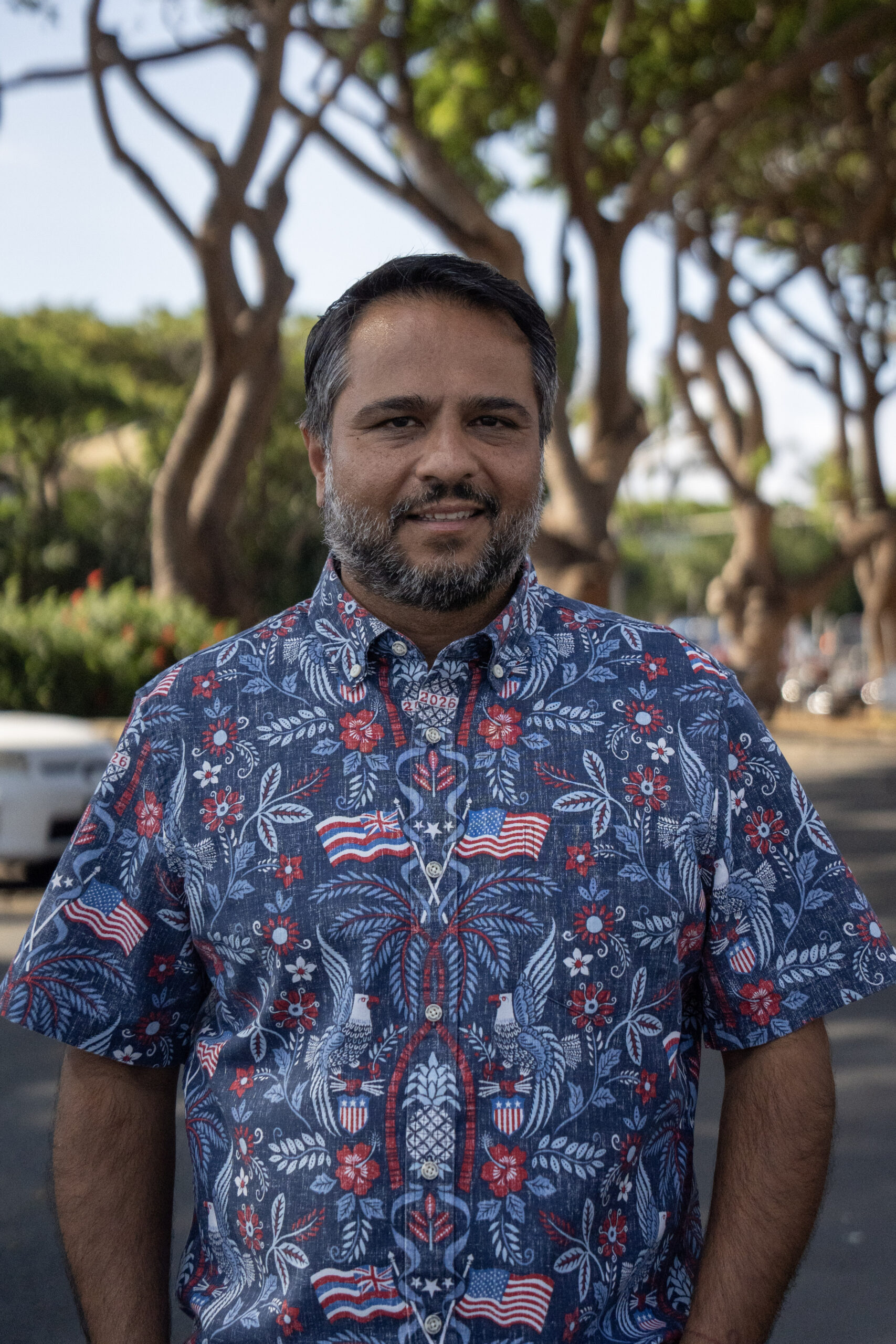
Patel also likes the idea of creating employee housing for businesses to make sure they can hire locally and keep workers on the west side. He pointed out the state and county own a lot of land, “and I think some of it could be used more aggressively for residential housing.” He supports public investment in infrastructure like roads, water and sewer systems to help speed housing projects along.
Proper infrastructure is also key to disaster preparedness. Patel said West Maui needs more road improvements and evacuation routes, better land management and firebreaks, improved communication systems and reliable water systems. He thinks proactive measures need to be taken to store water from storms to help with summer drought. Maui County is currently planning a 120-million-gallon reservoir site at its Mahinahina water treatment facility to help capture runoff.
Patel, who moved to Maui in 2002, has run for public office before, unsuccessfully challenging Tamara Paltin for the County Council seat in 2020. The married father of three said he decided to run this year because “there’s a lot at stake for West Maui,” which will face the daunting stages of the recovery that include infrastructure, public safety and economic development over the next few years.
He’s already landed endorsements from multiple labor unions representing local carpenters, plasterers and cement masons, sheet metal workers and painters.
“This election … will help determine the future of West Maui for decades,” Patel said. “We have to be really careful how those state resources are invested in the community.”
